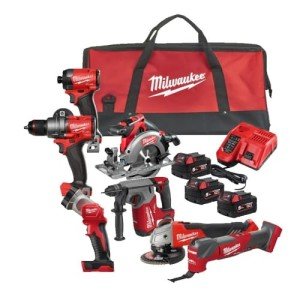
Power Tool Set
Add a reviewOverview
-
Sectors Construction
-
Posted Jobs 0
-
Viewed 27
Company Description
10 Things That Your Family Taught You About Battery Powered Tool Set
Comprehensive Guide to Battery-Powered Tool Sets
Over the last few years, battery-powered tools have actually transformed the method both experts and DIY lovers approach their jobs. With their benefit and efficiency, battery-powered tool sets have ended up being a staple in workshops across the country. This blog post looks into the benefits of battery-powered tools, essential parts, contrasts, and answers to some regularly asked questions.
Why Choose Battery-Powered Tool Sets?
Battery-powered tools provide various advantages over their corded equivalents:
-
Portability: Without the obstacle of a cord, battery-powered tools can be quickly transported and used anywhere.
-
Convenience: Quick setups eliminate the need for outlet gain access to, making them perfect for outside projects.
-
Lowered Trip Hazards: The lack of cables permits a much safer work space, especially in crowded or messy environments.
-
Technological Advancements: Most modern battery-powered tools feature effective lithium-ion batteries that provide longer runtimes and faster charging times.
Secret Components of a Battery-Powered Tool Set
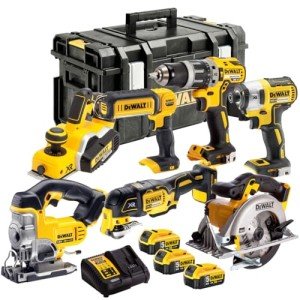
A common battery-powered tool set might consist of various tools tailored to fulfill the requirements of different projects. Below is a comprehensive table showcasing requirement tools found in these sets:
| Electric Tool Set | Function | Normal Battery Voltage | Common Brands |
|---|---|---|---|
| Drill/Driver | For drilling holes and driving screws | 12V to 20V | DEWALT, Makita, Milwaukee |
| Circular Saw | For cutting wood, plywood, and other products | 18V to 20V | Bosch, Ryobi, Black+Decker |
| Reciprocating Saw | For demolition and rough cuts in numerous products | 18V | Porter-Cable, Hitachi |
| Impact Driver | For driving big screws/fasteners | 12V to 20V | Artisan, Ridgid |
| Sander | For smoothing surface areas and completing wood | 12V to 20V | Ryobi, Milwaukee |
| Angle Grinder | For cutting and grinding metal, masonry, and tiles | 18V | Makita, DEWALT |
| Jigsaw | For detailed cuts in wood, plastic, and metal | 12V to 20V | Black+Decker, Bosch |
Noteworthy Features to Consider
When picking a battery-powered tool set, numerous features can boost use and performance:
-
Battery Life: Look for tools with lithium-ion batteries that offer longer runtimes and charge quickly.
-
Interchangeability: Some tool sets enable battery compatibility across several tools, minimizing the requirement for numerous batteries.
-
Weight: Consider the ergonomics; lighter tools can decrease tiredness throughout substantial use.
-
Toughness: Robust building and construction and protective features (like dust and water resistance) guarantee the longevity of the tools.
-
Guarantee and Support: Good brands usually offer guarantees that cover flaws and provide customer support for queries.
Comparing Battery-Powered Tools to Corded Tools
The choice between battery-powered and corded tools frequently boils down to individual choice and project requirements. Here’s a comparison:
| Feature | Battery-Powered Tools | Corded Tools |
|---|---|---|
| Mobility | High – can be utilized anywhere | Limited – requires distance to Power Tool Bundles outlets |
| Runtime | Minimal by battery life | Constant as long as plugged in |
| Power Tool Combo Kits Output | Typically less powerful than corded | Typically more powerful |
| Maintenance | Requires battery care | Lower upkeep; more uncomplicated |
| Rate | Normally greater preliminary investment | More cost-effective for private tools |
| Versatility | Lots of multi-purpose tools readily available | Specialized tools readily available |
Best Practices for Using Battery-Powered Tool Sets
To make the most out of a battery-powered tool set, follow these best practices:
-
Charge Batteries Regularly: To guarantee maximum battery life, avoid deep discharging and charge batteries after each use.
-
Clean Tools After Use: Keeping your tools clean lowers wear and tear and can help maintain their lifespan.
-
Shop Safely: Keep tools in a dry, protected place to avoid damage and make sure easy gain access to.
-
Check Out User Manuals: Each tool may have specific operating directions or upkeep pointers; reading the handbook can conserve time and disappointment.
Often Asked Questions (FAQs)
1. How long do battery-powered tools last?
The life expectancy of battery-powered tools depends upon usage and maintenance however can last numerous years with correct care. Lithium-ion batteries generally last 2-3 years, depending on charging practices.
2. Can I utilize my battery-powered tools in cold weather?
Severe cold can affect battery powered tool set efficiency. It’s best to keep batteries at space temperature level when not in use and permit them to warm up before usage in cold conditions.
3. Are all battery-powered tools suitable with the exact same battery?
Not necessarily. Battery compatibility frequently depends upon the brand name and specific tool design. It’s essential to confirm compatibility before acquiring extra tools.
4. How do I preserve lithium-ion batteries?
To preserve lithium-ion batteries, avoid total discharges, keep them cool, and charge them after use. It’s likewise recommended to use the manufacturer’s charger.
5. What are the most essential tools for a newbie?
For newbies, a drill/driver, circular saw, and impact driver are frequently the most essential tools to start with, as they cover a broad variety of fundamental tasks.
Battery-powered tool sets have transformed how we approach standard tasks, supplying a mix of benefit and efficiency. Whether for professional trades or DIY home enhancements, these tools cater to diverse job needs. By comprehending the functions, elements, and best practices related to battery-powered tools, users can optimize their performance and productivity. Equipped with this detailed guide, both beginners and experienced specialists can now make notified choices when picking their next tool set.